Booking choice: The classic Kazbegi day trip, from $25 per person. Check dates Tour details
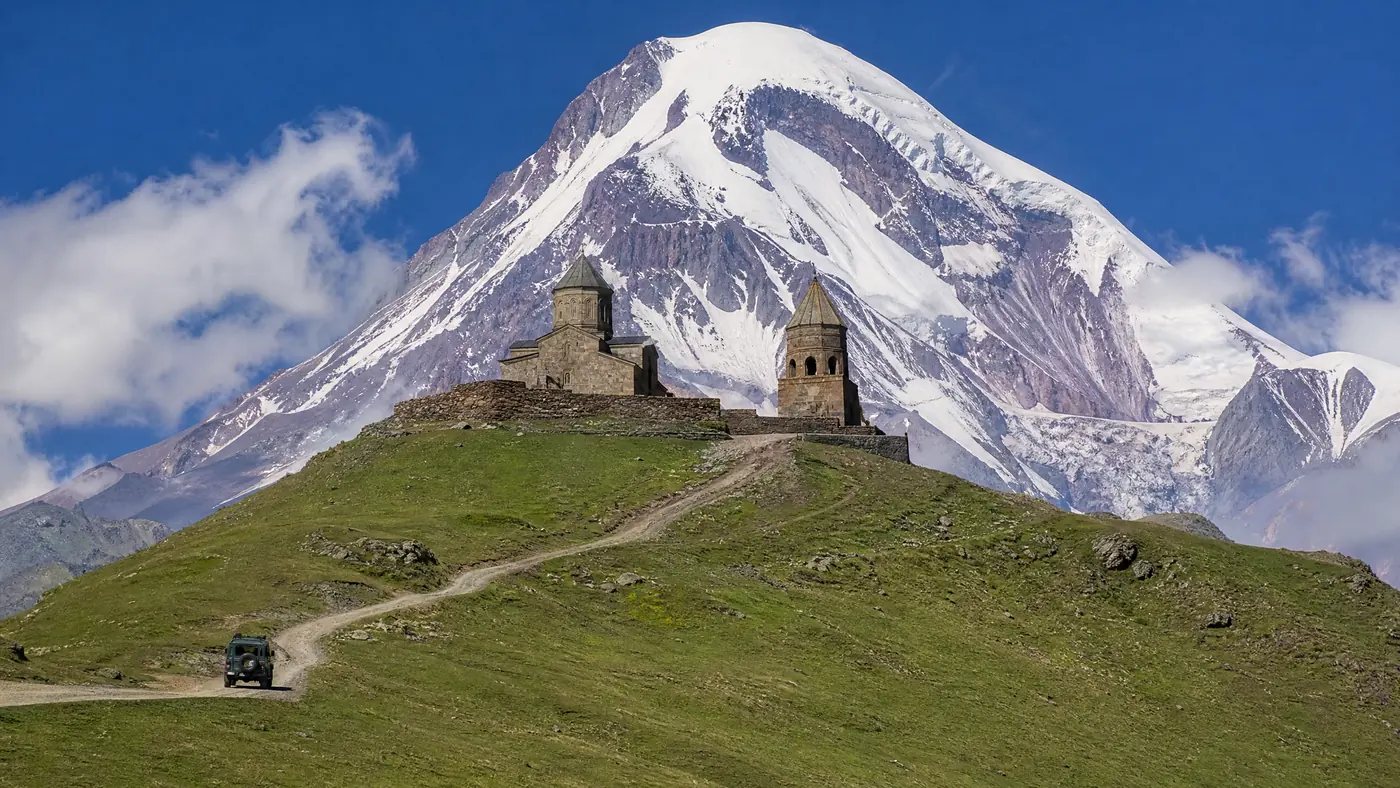
Stepantsminda, the town everyone still calls Kazbegi, sits at about 1,740 m on the Tergi river, 157 km north of Tbilisi. Gergeti Trinity Church stands higher again, at about 2,170 m, and the road crosses the Jvari Pass at 2,379 m on the way. Altitude sets the calendar here, not the date on the plane ticket.
Below: the best months and why, a month-by-month climate table, how cold summer really is, rain, winter and the road over the pass, and the festivals and trail seasons that make some weeks better than others. Day trips run all year, so the question is less "can I go" than "what will I see".
The quick answer
June to September is the best time to visit Kazbegi for green meadows, open trails and mild days, with September the driest of the warm months. Winter, from December to March, brings snow views and the frozen Gveleti falls, and the road over the Jvari Pass can close for a while after heavy snow. The classic day trip runs in every season, from $25 per person.
What is the best time to visit Kazbegi?
June to September for hiking, wildflowers and the clearest sense of the mountains; December to March for snow. September is our pick: still mild, and much drier than August.
Georgia Travel, the national tourism site, names summer as the season for hiking in Kazbegi, and winter as the season for the ski resort at Gudauri on the same road. Spring and autumn suit sightseeing, with occasional wind and rain. Here is how the year breaks down for a visit to Stepantsminda:
| Season | What it looks like | Good for | Plan for |
|---|---|---|---|
| Winter (December to February) | Snow in town and on the pass; mean daily highs around 0°C or below | Snow views, Gudauri skiing, the frozen Gveleti falls | Winter tyres on the pass road; short closures after heavy snow |
| Spring (March to May) | Snow melting from the valley up; May is one of the wettest months | Quiet roads, the first green | Snow can linger high up; layers |
| Summer (June to August) | Green meadows, Kazbek white above; highs about 17 to 20°C | Hiking, Juta, Truso, horse riding | Cool evenings; August is the wettest month |
| Autumn (September to November) | Gold slopes, first snow on the peaks by November | Photos, calmer trails, wine season in the lowlands | Shorter days; frost from October |
Whatever the month, Georgia Travel's advice for Stepantsminda stands: the town is always a little chilly, especially at night, so pack warm clothes whenever you go.
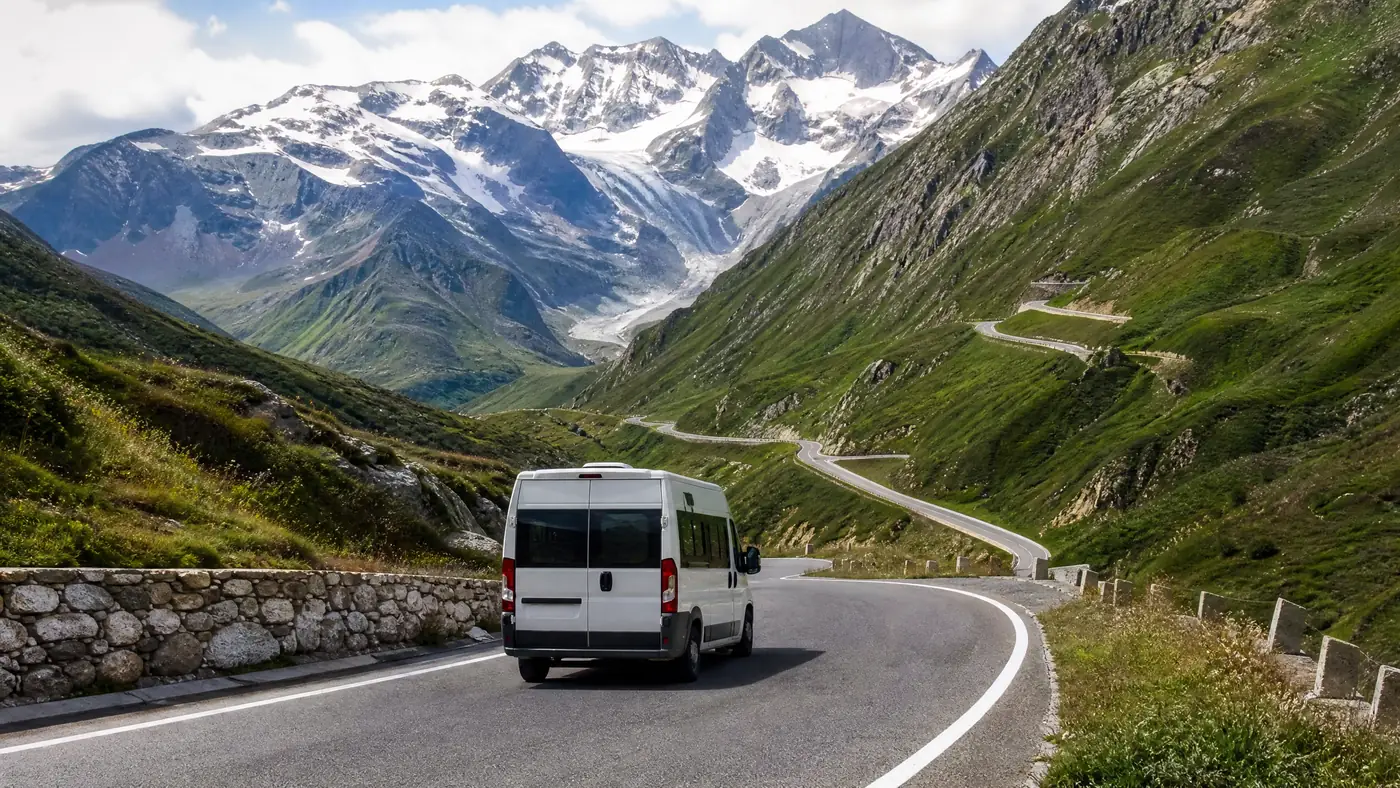
Ananuri, the Gudauri viewpoint and Gergeti in one day, with a wine and honey tasting, in any season.
Check dates for the classic Kazbegi day tripWhat is the weather like in Kazbegi month by month?
Cold and fairly dry from November to March, mild and showery from May to September. July and August are the warmest months, with mean highs of 20.2°C; January is the coldest, with mean lows of -11.1°C.
The averages for Stepantsminda, from the Climate-Data.org table that Wikipedia publishes for the town. Gergeti and the Jvari Pass stand 400 to 650 m higher, so expect them to be a few degrees colder.
| Month | Mean high | Mean low | Rain and snow |
|---|---|---|---|
| January | -1.9°C | -11.1°C | 34 mm |
| February | -1.5°C | -10.7°C | 38 mm |
| March | 2.7°C | -6.6°C | 66 mm |
| April | 8.8°C | -2.7°C | 103 mm |
| May | 14.2°C | 2.5°C | 145 mm |
| June | 17.5°C | 5.2°C | 132 mm |
| July | 20.2°C | 7.7°C | 126 mm |
| August | 20.2°C | 7.7°C | 149 mm |
| September | 16.4°C | 3.5°C | 82 mm |
| October | 11.4°C | 0.0°C | 69 mm |
| November | 4.4°C | -4.3°C | 62 mm |
| December | 0.0°C | -8.5°C | 37 mm |
Two things jump out. Summer nights stay cold, with mean lows of 5 to 8°C even in July. And the wet season is the warm one: May to August bring the most rain, while winter is dry but freezing. Wikipedia records an absolute low of -34°C and a high of 32°C, so both ends do happen.
Is Kazbegi cold in summer?
Cool rather than cold. July and August average highs of about 20°C in Stepantsminda, but nights drop to around 8°C, and the church and the pass are higher and windier.
Tbilisi in July and August is hot. Three hours north, it is a different climate. What that means for your day:
- Bring a warm layer even in August. The 2-day tour's listing says to wear warm clothing even in summer, and that weather in the mountains can change quickly.
- Wear real shoes. The path up to Gergeti is a 30 to 40 minute walk uphill, per Georgia Travel, if you skip the 4x4.
- Plan for wind at the Gudauri viewpoint and the Jvari Pass, the highest point of the road at 2,379 m.
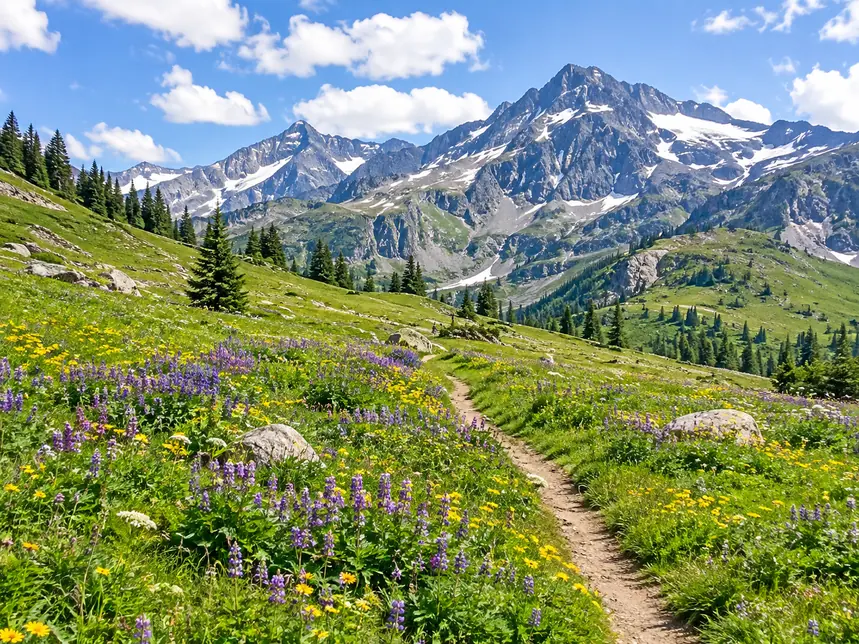
The reward is the green. In June and July the meadows around Stepantsminda fill with flowers, and Georgia Travel says spring and summer hikers to the Gveleti falls walk through a perfume of floral blooms.
Does it rain a lot in Kazbegi?
In late spring and summer, yes, often in showers. May, June and August each bring about 130 to 150 mm, while December and January bring under 40 mm.
The table above adds up to just over 1,000 mm a year, most of it between April and August. In practice, that means mountain showers and cloud that can sit on Kazbek for a few hours, and then lift. September is the sweet spot: 82 mm, about half of August, with mean highs still around 16°C.
Rain does not stop the day trips. The classic tour's listing says the itinerary may be adjusted for weather, road conditions or safety, with alternative stops offered when needed. Pack a light rain jacket in the warm months and keep a spare day if the view of Kazbek matters most to you.
One thing a day trip cannot promise is a clear summit. A night in the mountains gives you a second chance: our guide to how many days in Kazbegi covers the options.
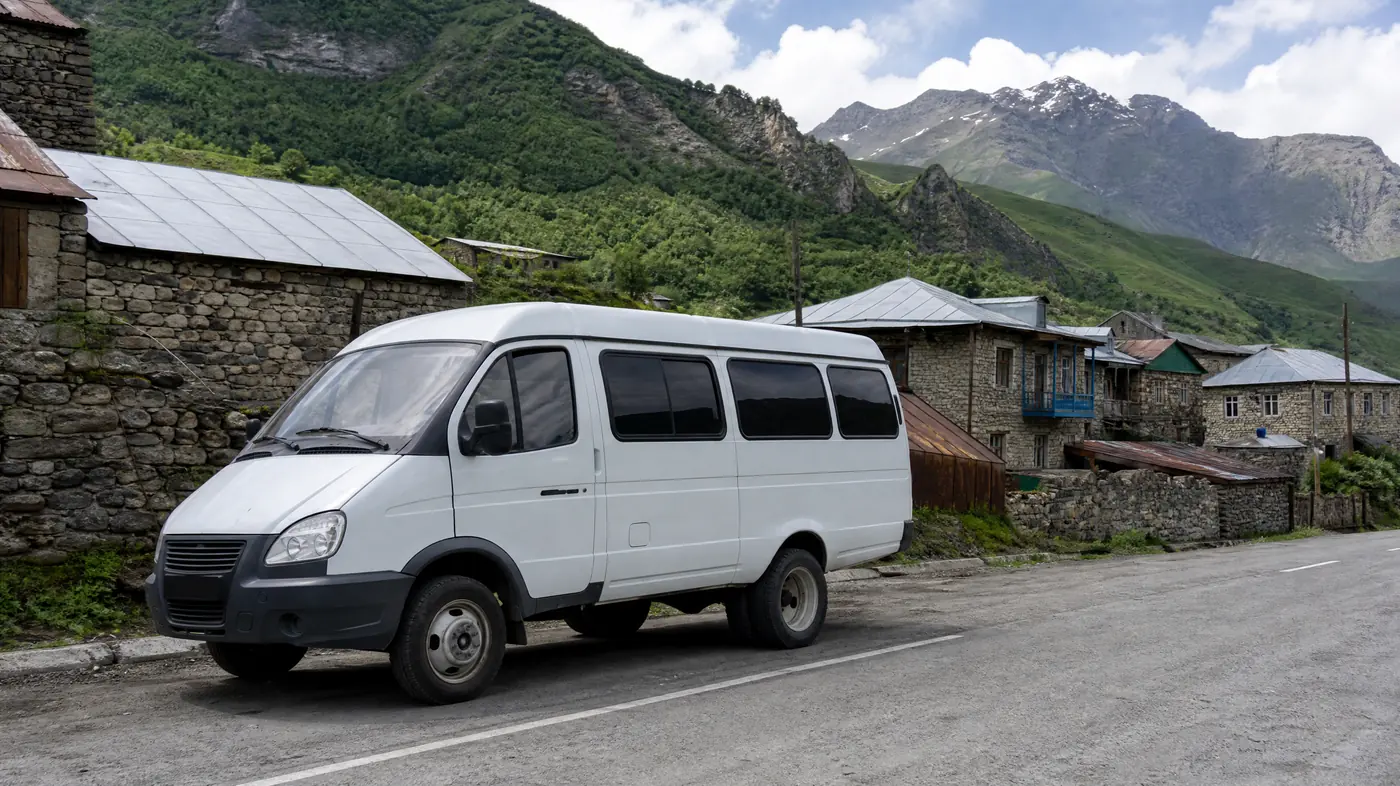
The classic day on the Military Road: Zhinvali, Ananuri, the Gudauri viewpoint and Stepantsminda, with a guide, an air-conditioned bus and a wine and honey tasting.
Explore the classic Kazbegi day trip Tour detailsCan you visit Kazbegi in winter?
Yes. Day trips run through the winter, and the snow makes Gergeti and the pass look their most dramatic. The road over the Jvari Pass can close for a time after heavy snow, and tours adapt.
What changes from December to March:
- The road. The Roads Department of Georgia closes the Gudauri to Kobi section of the Mtskheta-Stepantsminda-Larsi road when there is an avalanche threat or a blizzard, as 1TV, the Georgian public broadcaster, has reported several times. Closures are temporary; we give no dates because none are fixed.
- Winter tyres. From 1 December to 1 March, winter tyres are compulsory on the Mleta to Kobi section of that road, which takes in Gudauri and the pass, under government decree 526 on the Matsne legal portal. Tour vehicles and drivers handle this for you.
- The 4x4 to Gergeti. The 2-day tour's listing says the ride up is subject to weather and road conditions. Snow can change the stops on any trip.
- Gveleti. The Gveleti waterfall hike says the falls are frozen from October to May.
- The cold. January averages -6.5°C over the day in Stepantsminda. Boots, a hat and gloves.
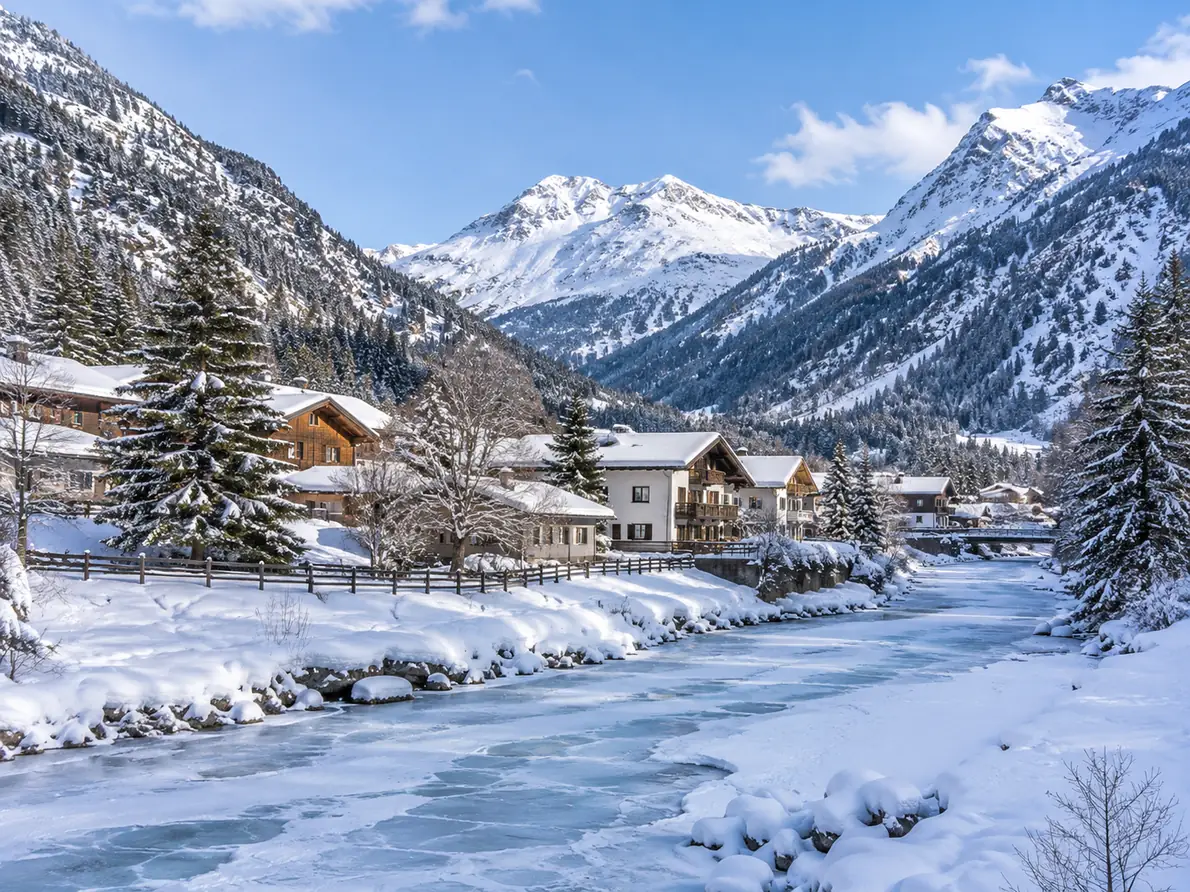
Gudauri, on the same road, is the ski side of the trip in winter; Georgia Travel says it is covered with snow for about five months of the year. Kazbegi or Gudauri compares the two.
When does the snow start and end in Kazbegi?
In town, the mean daily temperature sits at or below 0°C from November to March. The first snow on the peaks often comes in autumn, and Mount Kazbek keeps its snow all year.
The climate averages for Stepantsminda give the outline: the daily mean reaches 0.0°C in November, falls to -6.5°C in January and climbs back to -2.0°C in March. April is the thaw, with a mean high of 8.8°C. Kazbek itself, at 5,054 m, is snow-covered all year, per Georgia Travel.
The road shows the season too. On 9 November 2026 the Roads Department of Georgia posted that it had lifted a restriction on trailers and semi-trailers on the Gudauri (Posta) to Kobi section, a sign that the winter rules are already in play this year. The department lists every restriction on its website under Restrictions, and runs a hotline on 032 2 31 30 76.
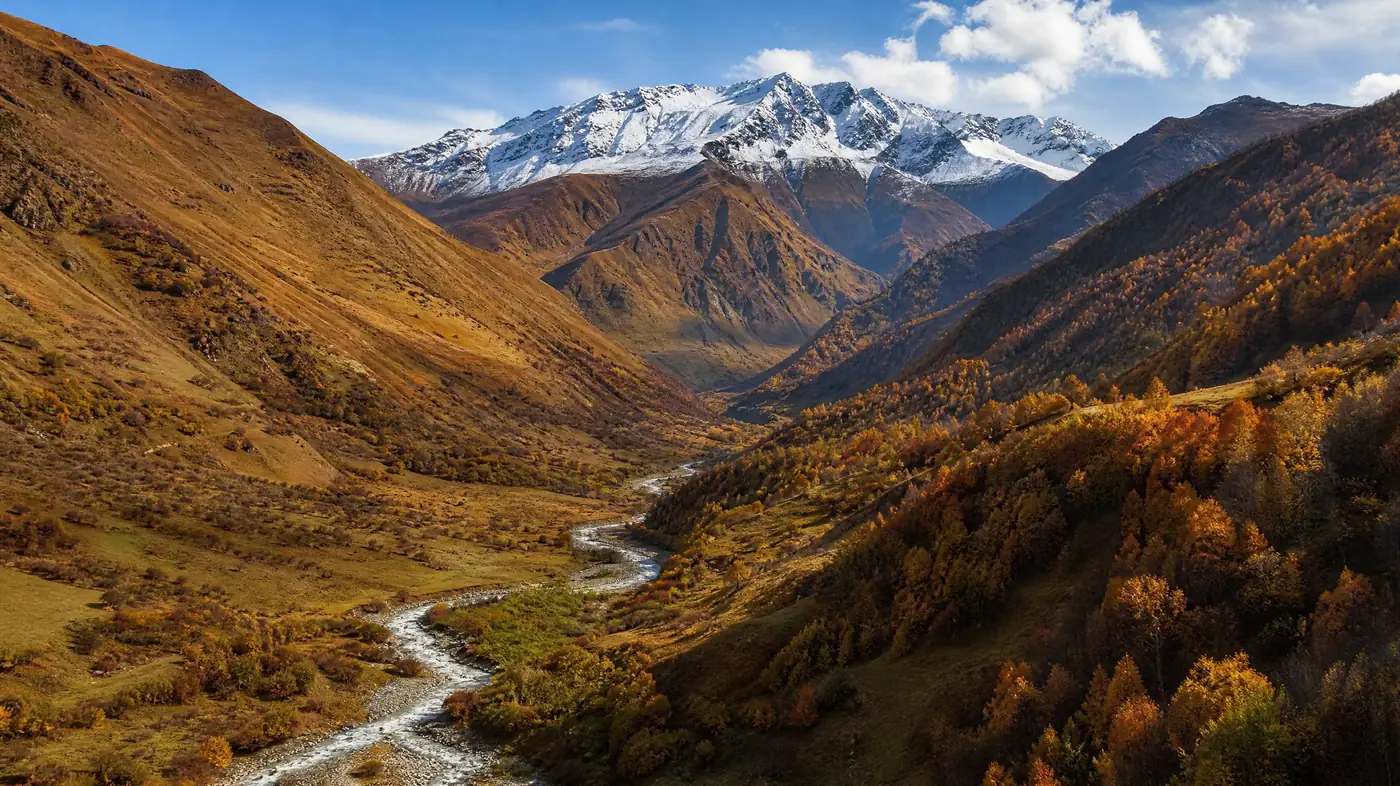
If you want Gergeti white on its ridge, come from December to March. If you want the green ridge with the white peak behind it, come from June to September.
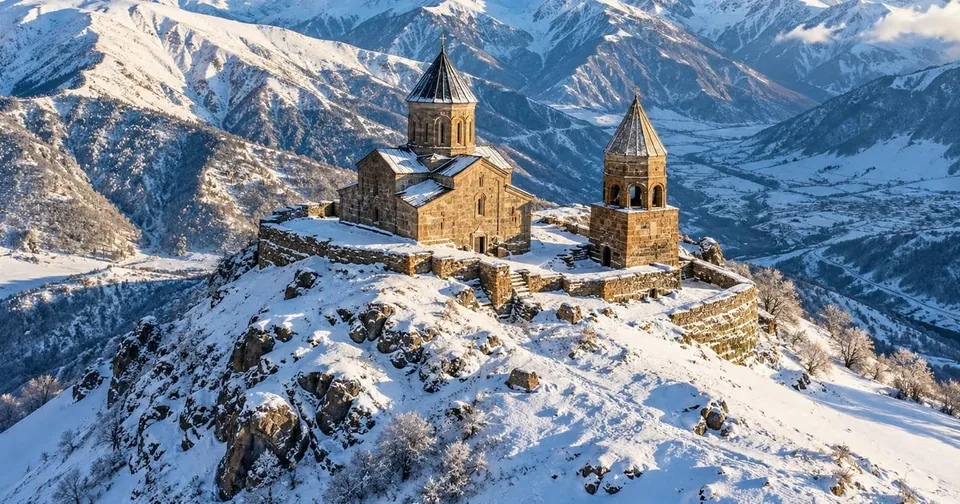
The 4x4 up to Gergeti, entrance fees and a certified guide in one price, winter or summer.
Check dates for the day trip including the 4x4What is Kazbegi like in spring and autumn?
Spring comes late at this height: snow lingers into April and May is wet. Autumn is short and golden, from September into October, before the frost.
Georgia Travel calls April to early June and September to late November the ideal time for cultural and historical tours across Georgia. Up in the mountains of Mtskheta-Mtianeti, it adds, spring starts late and autumn starts early. In Kazbegi that splits the shoulder seasons like this:
- April and May: mean highs of 8.8 to 14.2°C, the valley turning green, the peaks still white. Juta's hiking season starts at the end of May, per Georgia Travel.
- September and October: highs of 16.4 to 11.4°C and the driest weeks of the warm half of the year. Georgia Travel says the Gveleti falls are at their most impressive from August to October, when the sweetbrier, barberry and sea buckthorn bloom.
- November: the first snow, short days, a quieter road. Mean highs of 4.4°C.
Autumn is also grape harvest time in the lowlands, as Georgia Travel describes it; the wine country makes a separate day out from Tbilisi.
Stay a night or two in Kazbegi in the shoulder season and ride back with a later group.
Check dates for the flexible-return tourWhen are the festivals and the trail seasons in Kazbegi?
Juta's trails fill from the end of May to October, and the Atengenoba festival there falls in the last week of June. Stepantsminda also celebrates Kazbegoba and Gergetoba.
What Georgia Travel lists for the area:
- Atengenoba in Juta: the Khevsureti shrine festival, celebrated in the last week of June with ancient rituals.
- Kazbegoba and Gergetoba: local holidays in Stepantsminda, when many visitors gather and the bars and cafes take on a festive mood. Georgia Travel gives no fixed dates.
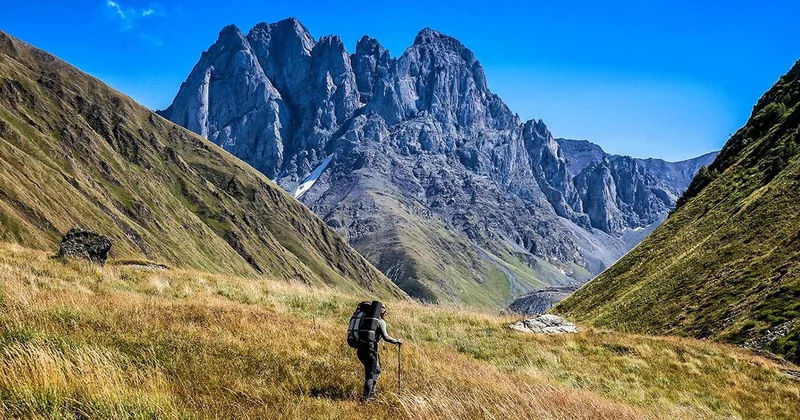
- The Juta trail season: long lines of backpackers from the end of May until October, for the Chiukhi (Chaukhi) Mountains and the 4 km path to Juta Lake.
For a day trip, any of these weeks works. The tours start in Tbilisi every day, cancel free up to 24 hours before, and in July and August it pays to book a few days ahead. Getting there: every way from Tbilisi to Kazbegi.
Frequently asked questions
What is the best month to visit Kazbegi?
September: mean highs of about 16°C and roughly half the rain of August. June to August are greener and warmer, and December to March bring snow.
Is Kazbegi cold in summer?
Cool rather than cold. July and August average highs of about 20°C in Stepantsminda, but nights fall to around 8°C, so bring a warm layer.
Is the road to Kazbegi open in winter?
Usually, yes. The Gudauri to Kobi section can close for a while after heavy snow or an avalanche threat, and winter tyres are compulsory there from 1 December to 1 March.
Is the Gveleti waterfall frozen in winter?
Yes. The guided hike's listing says the waterfall is frozen from October to May.
Ready to book
Choose your day trip
Free cancellation up to 24 hours before on every option. Prices are from-prices in USD and move with the season.
Kazbegi, Ananuri, Gudauri & Gergeti Day Trip
- 10.5-hour day trip from Tbilisi
- Professional guide
- Air-conditioned bus
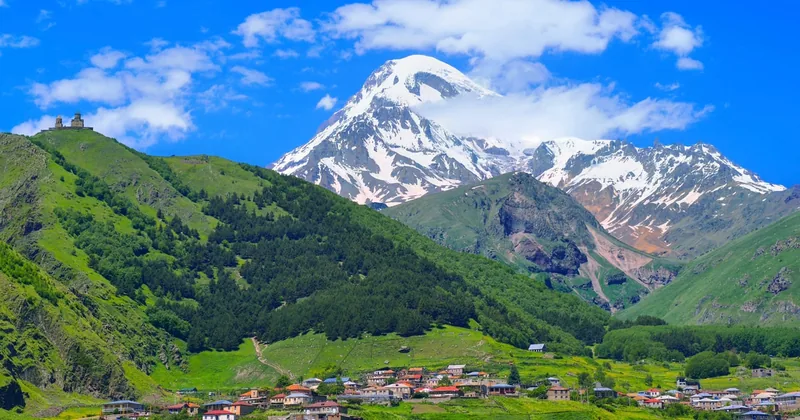
Kazbegi Day Trip Including the 4x4
- 10.5-hour day trip from Tbilisi
- 4x4 up to Gergeti Trinity Church
- Entrance fees
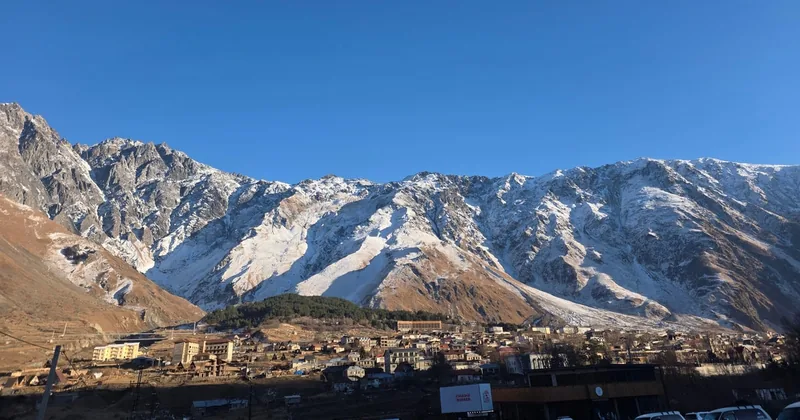
Kazbegi Tour with Flexible Return
Stay in Kazbegi and ride back with a later group